
On a cave dive, your attention is on the guideline, your gas, your buddies — and it has to be: it’s an environment that doesn’t forgive mistakes. But that same focus means a lot of what’s actually around you slips by unnoticed. That’s where I come in: while you focus on the dive, my job is capturing everything happening in front of you.
Cave diving isn’t the same as diving an open cenote, and cave diving photography isn’t like anything else either. You’re inside a closed system, with no natural light, following a guideline through passages that can stretch for kilometers underground. It’s about as technical as diving gets, and that’s exactly why very few photographers do cave diving photography.
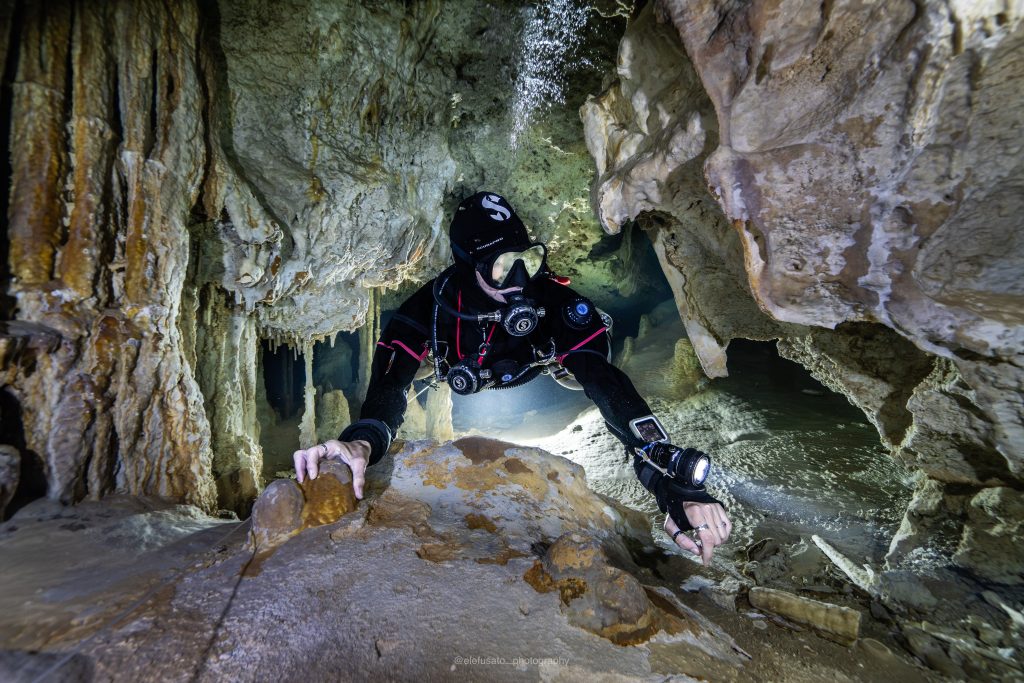
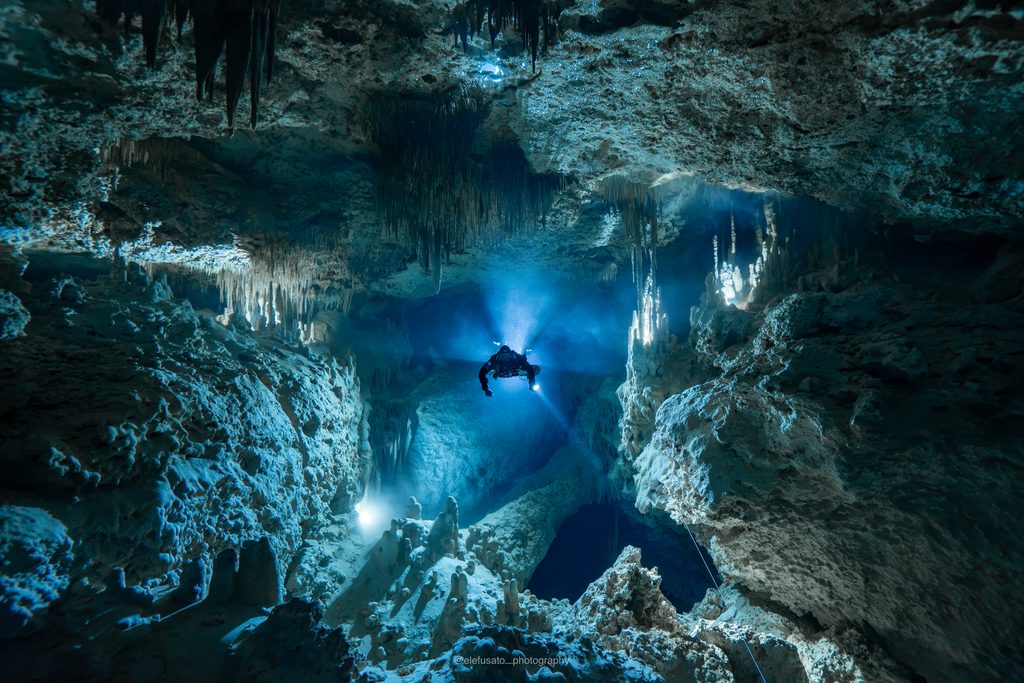
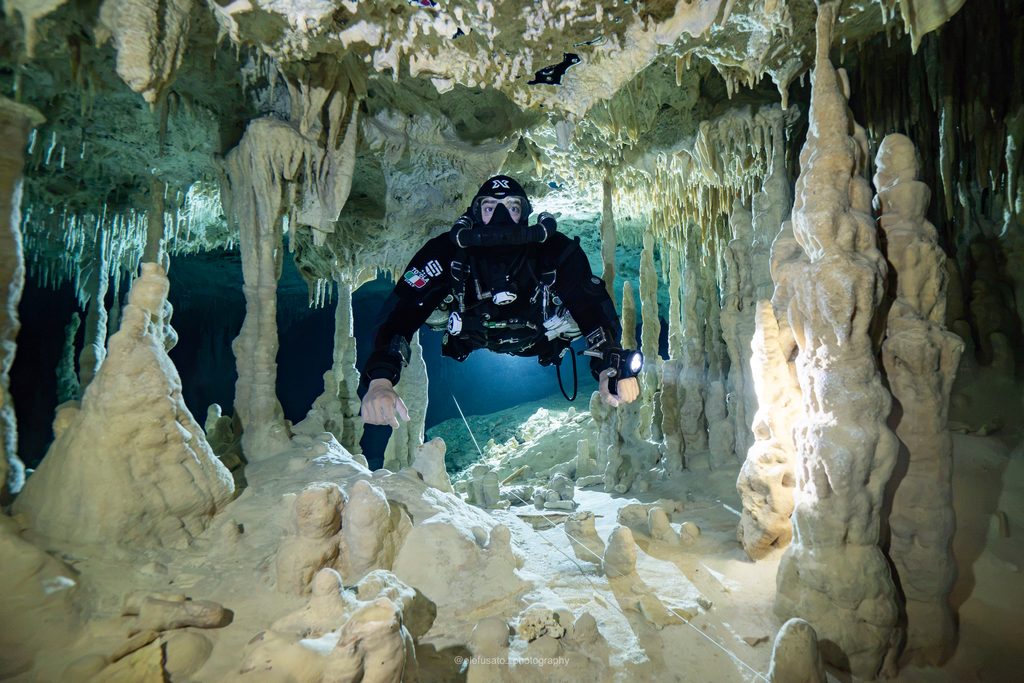
A World Almost No One Gets to See
Very few people in the world ever get to see what’s inside a flooded cave. It’s not a place you enter out of curiosity: it takes certification, preparation, and respect for an environment that doesn’t forgive mistakes — and that’s exactly what makes photographing it a privilege.
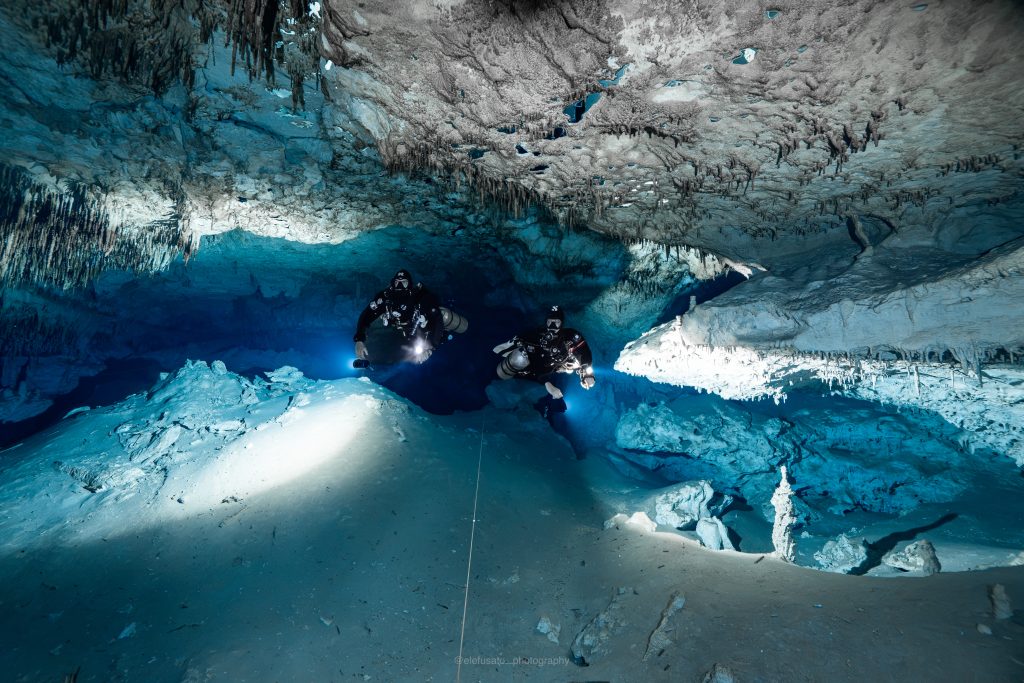
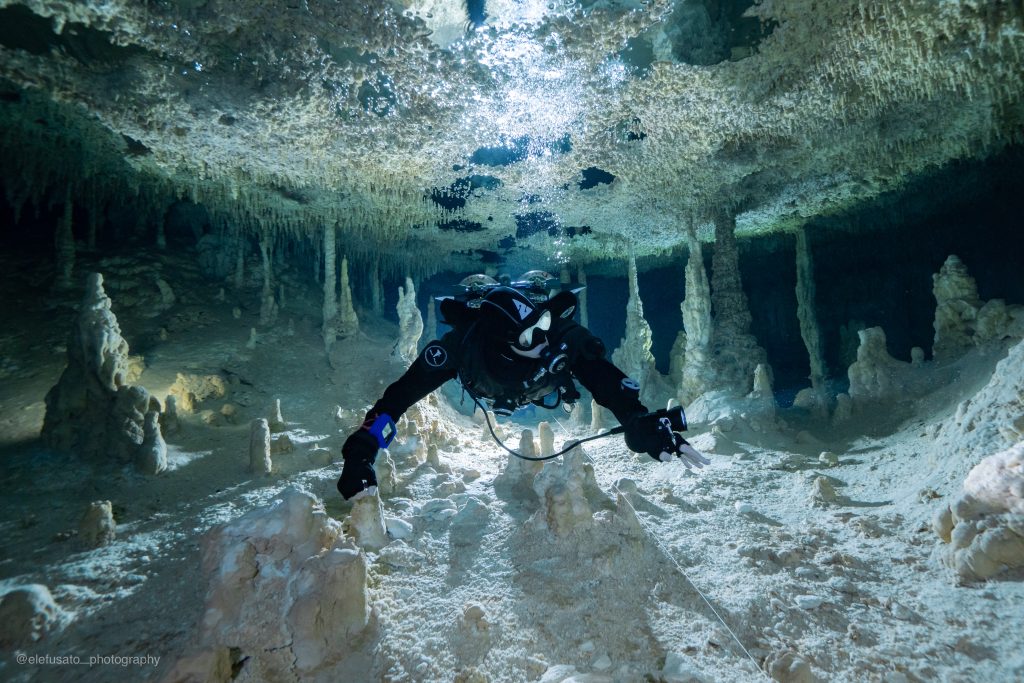
In a cenote, there’s still some light coming in from outside, a visual reference, an open ceiling, some room to move. In a cave, none of that exists. The only light is the light you bring, the only sound is your own breathing, and every meter you swim in is a meter you have to swim back out. Formations that took thousands of years to grow, passages that very few people in the world have ever laid eyes on, a silence that doesn’t exist anywhere else.
Shooting down there means working with artificial lighting, knowing the guideline as well as the diver ahead of you, and moving without stirring up a single extra particle, because one silt-out ends the whole session in an instant. That’s why cave diving photography isn’t something just any dive photographer can offer: you have to be a cave diver first, photographer comes second.
To document your dive, you need Full Cave certification, or at least Cavern/Intro to Cave depending on the system and the route. Inside a cave, there’s no option to swim straight to the surface: every dive is planned around gas limits, time, and exit points, all worked out before you enter the water.
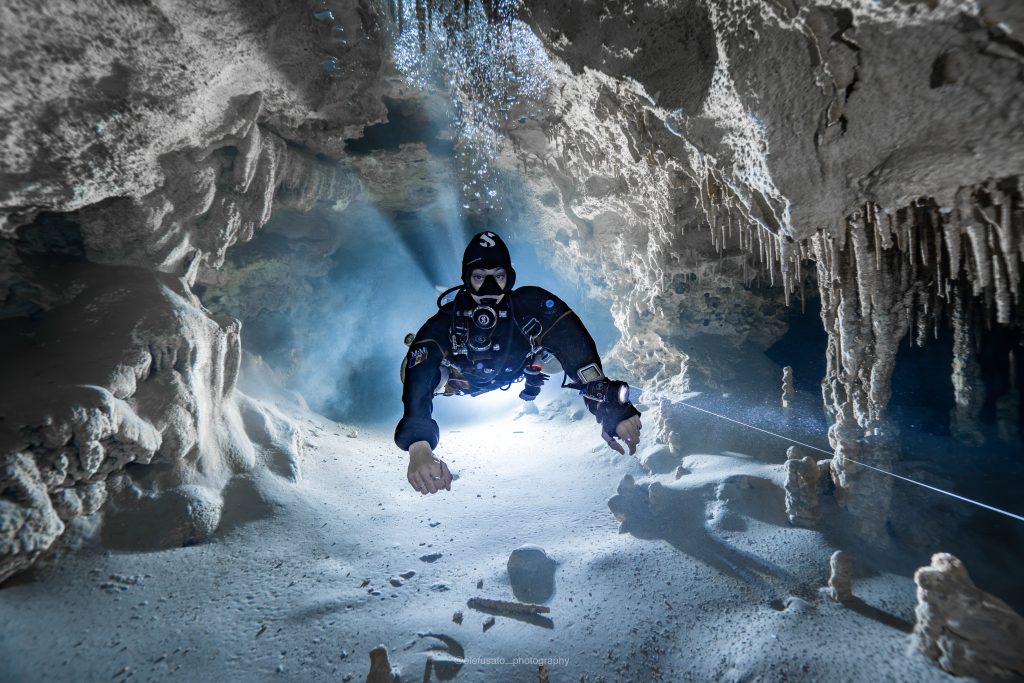
Why Choose Me for Your Cave Diving Photography
I don’t just take photos — I also shoot video, so you come away with material in both formats from the same dive. I work with artificial lighting built to bring out the color and texture of the rock, not just to see by, and I look for the angles that make a formation or a passage look like what it really is: spectacular.
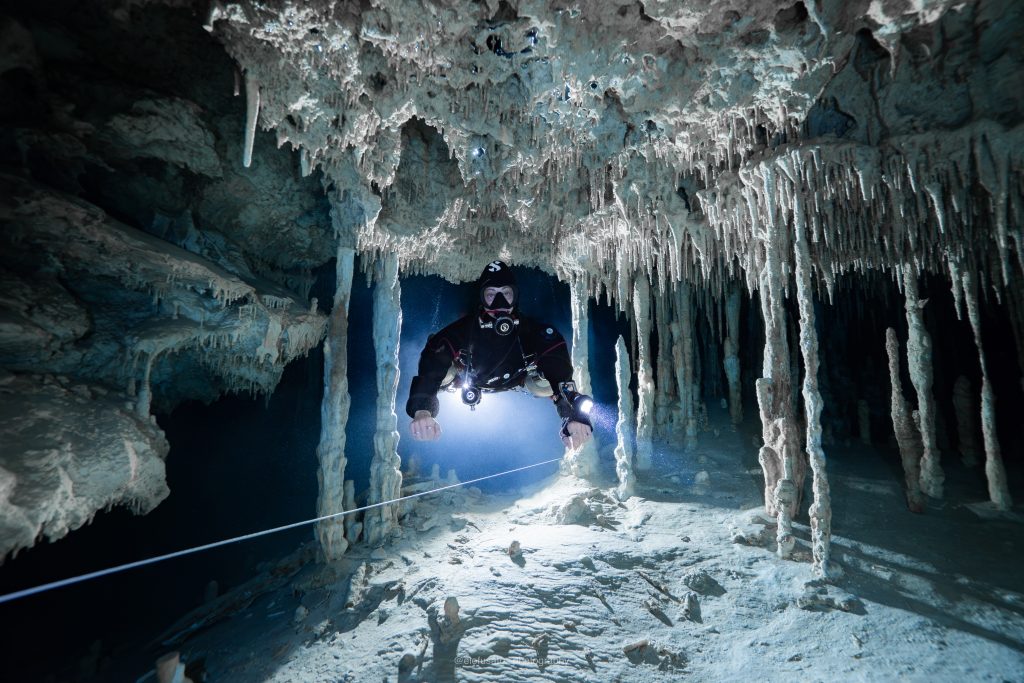
And here’s the real advantage of bringing me along: while you’re focused on your line, your gas, and your buddies, my only job on that dive is capturing you. You surface with images of passages and formations you barely saw yourself, because you were busy diving the cave, not photographing it.
And just like with cenote sessions, delivery is fast. I hand over your edited material in a couple of days.
You take home a real record of a dive that very few people in the world ever get to make: material for your technical diving portfolio, for your own certification log, or simply proof of something most people don’t even know exists.
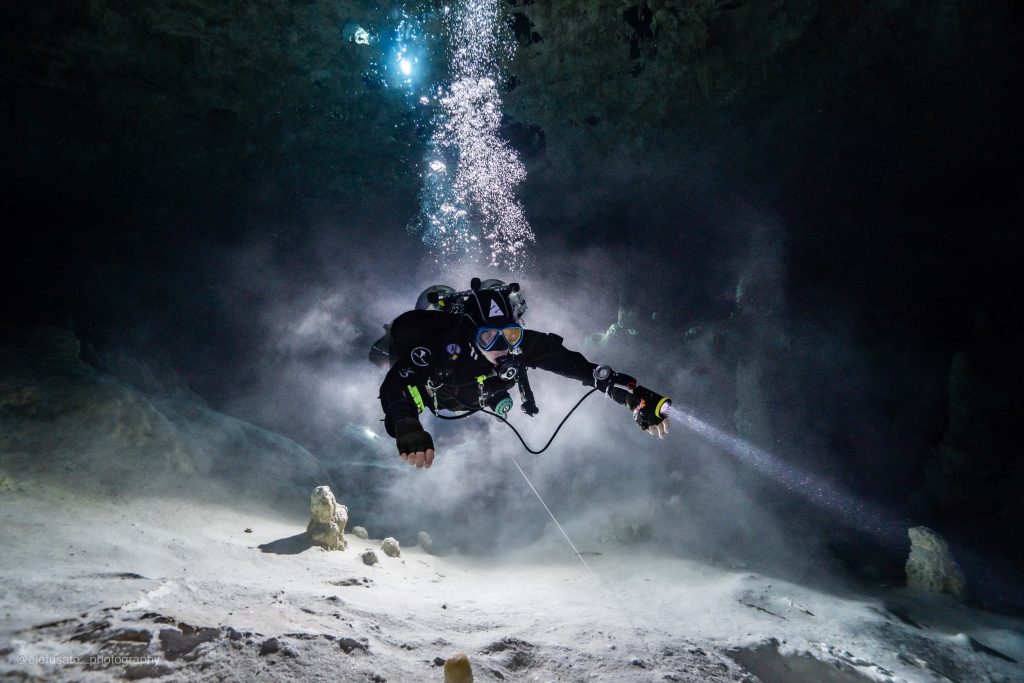
Book Your Cave Diving Photography Session
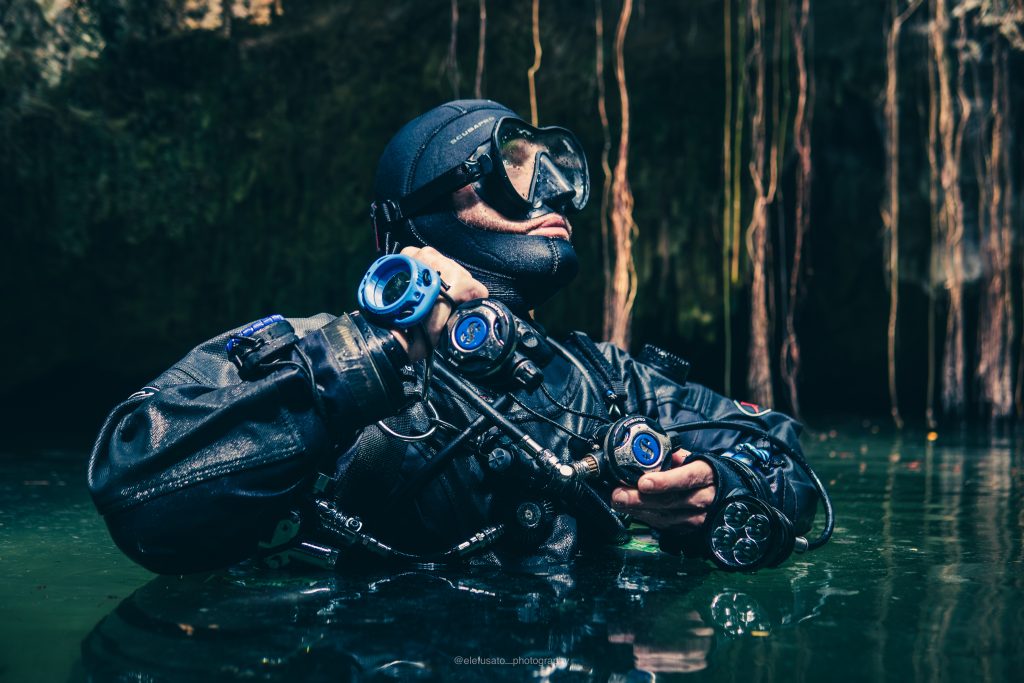
If you already hold your cave certification and want to document your dive in the Riviera Maya systems, message me on WhatsApp/Instagram or through www.serenaphotodivemexico.com. Tell me your certification, the system you want to run, and your dates, and we’ll plan the dive together.
Not cave certified yet? Here’s what cenote diving looks like while you build up experience.
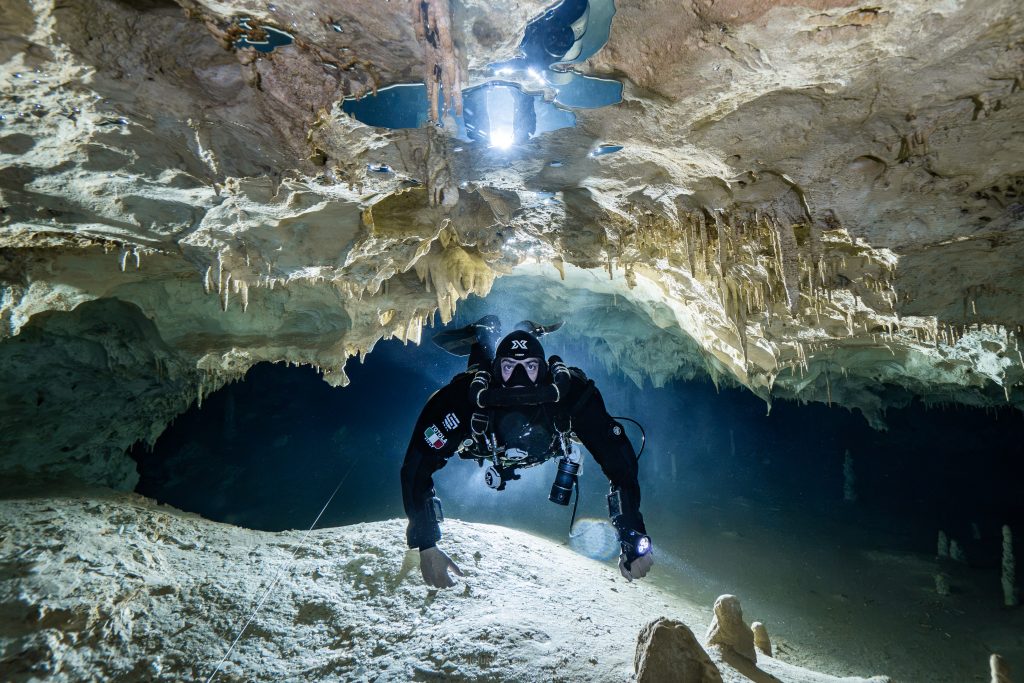
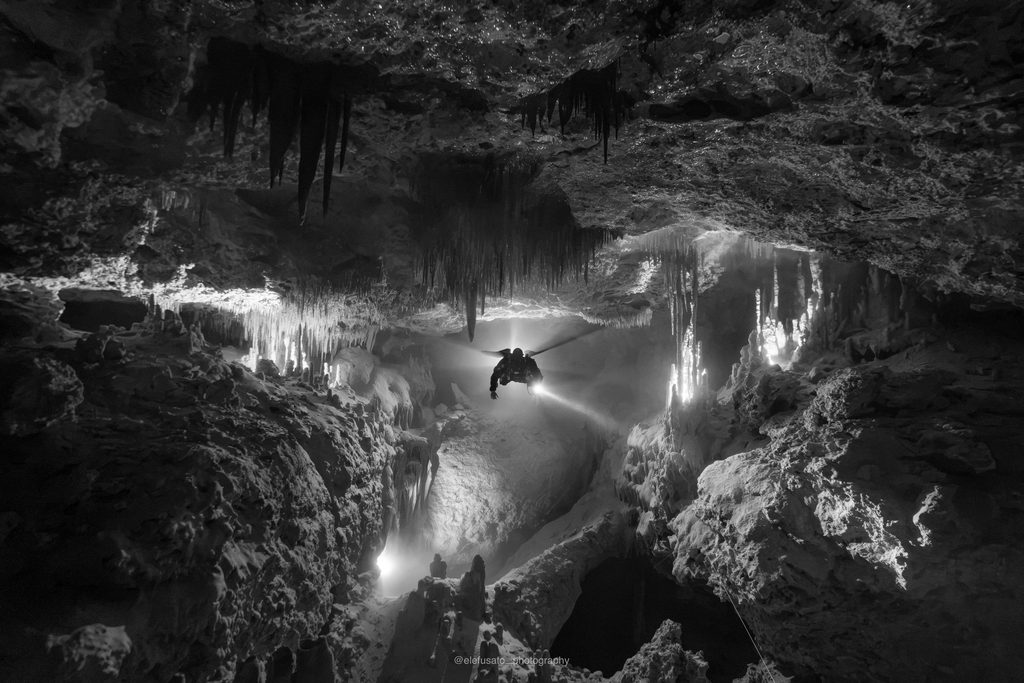
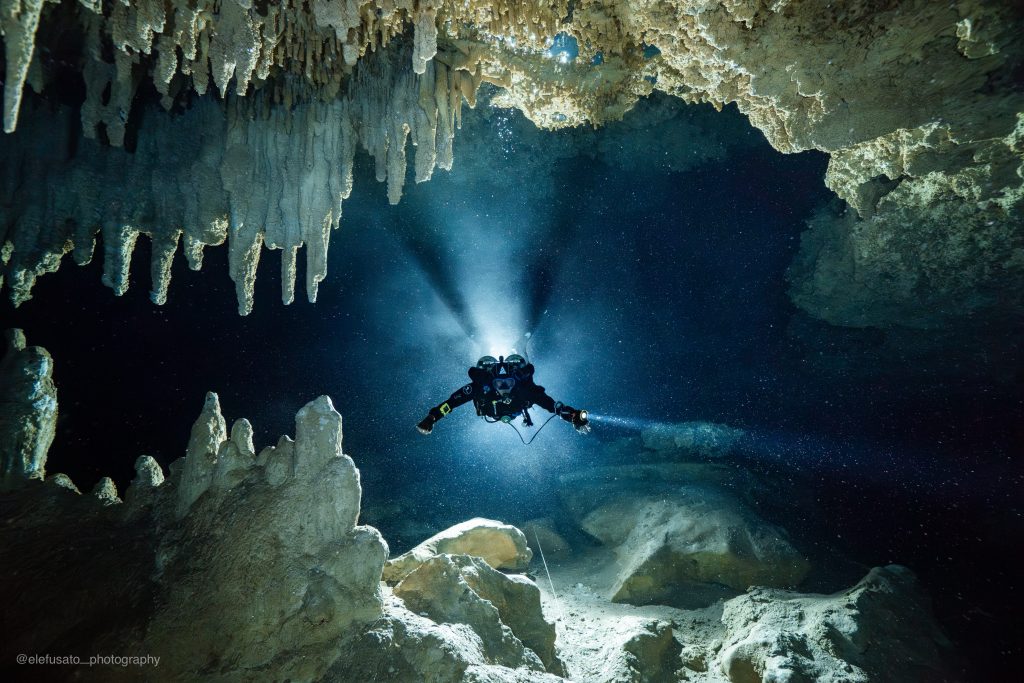
Serena Photo Dive Mexico — cave, cenote, and open water dive photography and video, in Playa del Carmen, Quintana Roo.